Local educational guidance, not legal, tax, lending, insurance, or flood-zone advice. Verify property-specific details with the appropriate licensed professionals and official sources.
Start with your weekly map
Tampa Bay is a region, not one compact city. A home that looks close on a map can create a very different weekday depending on bridges, school-hour traffic, and where you work most often. Before comparing listings, mark the places you expect to visit every week: office, airport, family, healthcare, water, and the activities that make a place feel like home.
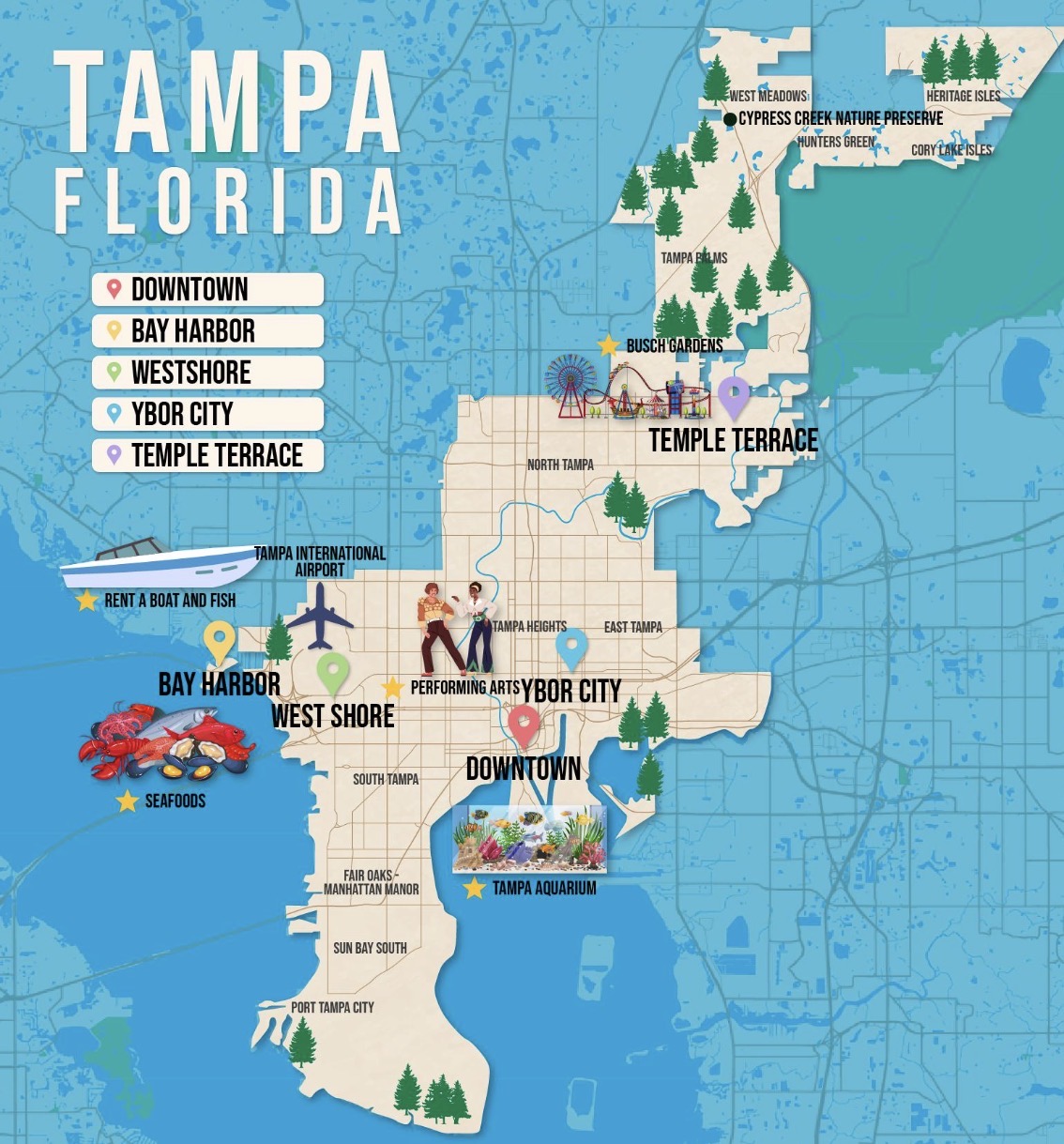
That map usually reveals a useful first choice: stay close to Tampa’s urban core, move north for newer communities and space, look east and south for value and inventory, or choose Pinellas for a more coastal rhythm.
- Test important drives during the hours you will actually travel
- Decide whether city access, beach access, or home size wins a tie
- Compare two or three lifestyle zones before narrowing to subdivisions
Continue exploring Tampa Bay
Compare the places—and what is changing around them.
 City comparisonTampa vs. St. Pete: Where Should You Live?
Compare lifestyle, housing, commute times, neighborhoods, walkability, nightlife, beaches, and cost of living.
Read the comparison → Future developmentWhat’s Coming to Tampa Bay: The GasWorx Development Guide
Explore one of the largest redevelopment projects in the region and learn how future growth could influence housing, jobs, and neighborhood demand.
Explore GasWorx →Choose a lifestyle zone before a neighborhood
Begin with the broad experience you want: an urban neighborhood near restaurants and work, an established suburb with more space, a master-planned community with newer homes and amenities, or a coastal setting closer to the Gulf. This keeps the search focused on daily life instead of a long list of neighborhood names.
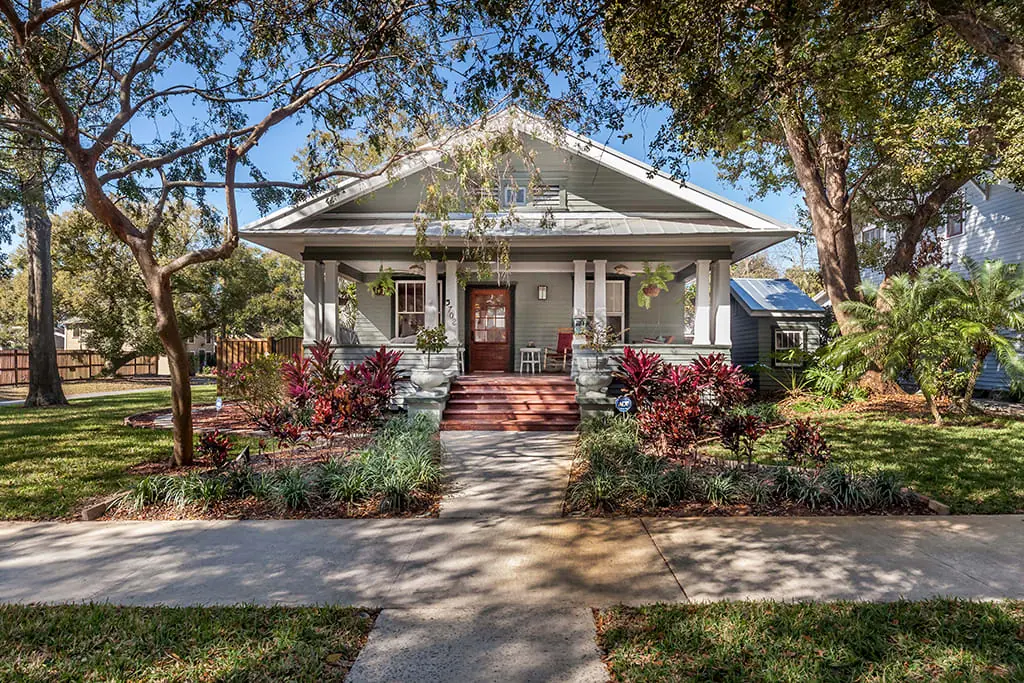
Once one or two zones rise to the top, compare neighborhoods inside them block by block. Walkability, home age, traffic, flood exposure, community fees, and access to everyday errands can change within a short distance.
- Urban core: proximity and activity, often with less space
- Established suburbs: mature streets and varied housing stock
- Growth corridors: newer homes and amenities, often with longer drives
- Pinellas and the coast: water-oriented living with added bridge and storm considerations
Test the commute you will actually make
Straight-line distance is a poor guide to Tampa Bay travel. Bridges, school schedules, event traffic, construction, and a small number of major corridors can turn two similar-looking locations into very different routines. Test the route at the time and on the day you expect to use it.

Hybrid work changes the calculation but does not eliminate it. Count fixed weekly trips to work, school, the airport, healthcare, and family, then decide which routes must stay easy and which can be occasional.
- Drive both directions during a realistic peak period
- Check bridge dependence and practical alternate routes
- Include airport, school and weekend destinations—not only the office
Understand the housing mix
The region includes historic bungalows, mid-century ranch homes, high-rise condos, master-planned communities, waterfront property, and extensive new construction. Each comes with a different due-diligence list. Older homes may reward character but require closer review of roofs, electrical systems, plumbing, and insurance eligibility. Newer communities can reduce immediate maintenance while adding HOA, CDD, lot-premium, and builder-contract considerations.
Compare condition and ownership structure alongside layout and location. A condo’s reserves and assessments, a planned community’s recurring fees, or an older home’s systems can matter as much as the finishes visible during a showing.
Research schools and boundaries carefully
If schools are part of your move, begin with the programs and logistics that matter to your household rather than relying on a neighborhood reputation or a single rating. District boundaries, assignment policies, transportation, magnet and choice options, and enrollment requirements can change.
Verify every address directly with the relevant district before making a housing decision. Then test the school-day route and consider how pickup, after-school activities, and childcare fit the rest of your weekly map.
- Confirm current zoning with the school district for the exact address
- Review programs, transportation and enrollment requirements
- Visit schools and evaluate them using your household’s own priorities
Make insurance and flood review an early step
Flood zones, evacuation zones, and insurance underwriting are separate questions. A property can be outside a lender-required flood zone and still have storm exposure; another may sit in a mapped zone but carry useful mitigation features. Ask for the elevation certificate when available, claims history, roof age and permits, wind-mitigation report, and current insurance declarations.
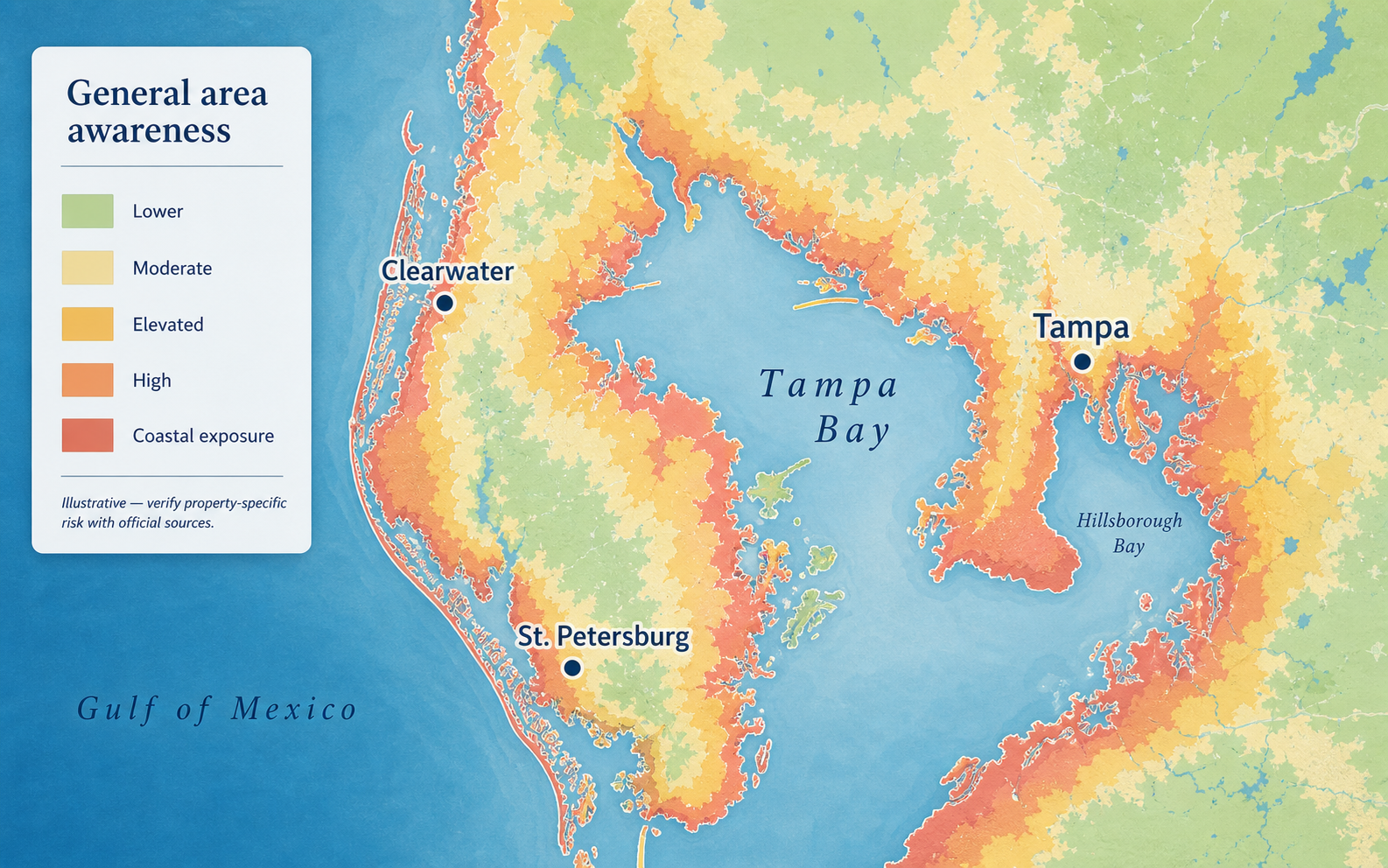
Bring an insurance professional into the process before the inspection period is nearly over. Early quotes help you compare homes on real carrying cost and identify documentation that could improve underwriting.
Compare the complete cost of ownership
A useful budget goes beyond principal and interest. Add estimated property taxes after the sale, homeowners insurance, possible flood coverage, HOA or condo dues, CDD assessments, utilities, commuting, and a realistic maintenance reserve.
Compare finalists with the same time horizon. One home may cost more upfront but need less near-term work; another may have a lower price and no CDD but require a roof, HVAC, plumbing, or electrical update. The clearer comparison is monthly cost plus likely projects over the next five years.
- Monthly: payment, taxes, insurance, fees, utilities and commute
- Near term: inspections, move-in work and major systems
- Long term: maintenance, assessments, mitigation and resale context
Build a focused first visit
A productive relocation visit is not a marathon of showings. Spend time in your strongest two or three areas, drive the ordinary routes, and experience each place in the morning and evening. Tour representative homes at different ages and price points so you can see what the budget buys—not just the most photogenic listing.
Use the neighborhood guides below to create that shortlist, then share your timing, budget, commute, and must-haves through the relocation questionnaire. That gives Dante enough context to recommend a useful first route.