Tampa Bay relocation field note
Tampa vs. St. Pete: Where Should You Live?
Two city centers, one bay, and different weekly rhythms. The useful question is not which city wins—it is which one better supports the way you want to live.
Local educational guidance, not legal, tax, lending, insurance, or flood-zone advice. Verify property-specific details with the appropriate licensed professionals and official sources.
The quick comparison
The 30-Second Answer
These are useful starting points, not hard rules. The neighborhood, housing type and location of your weekly obligations can matter more than the city name.
Daily life
Living in Tampa vs. St. Pete
Both cities offer historic neighborhoods, water access, restaurants and culture. The difference is how those pieces are arranged—and how much driving your version of Tampa Bay requires.
Overall atmosphere
TampaA larger, more spread-out city with several business districts, historic neighborhoods, major venues and suburban communities extending in multiple directions.
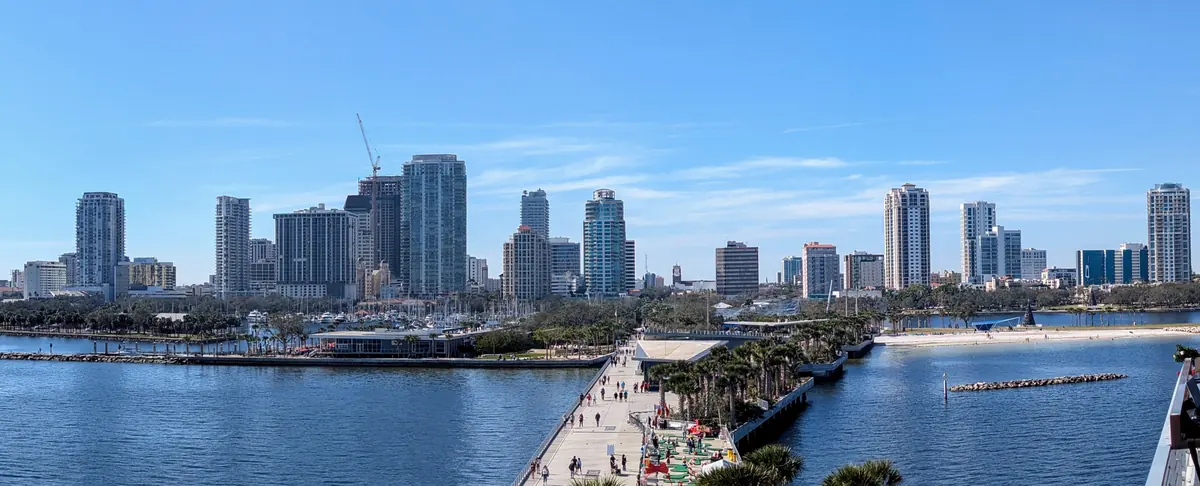
St. PeteA smaller peninsula city with a concentrated downtown, waterfront parks and a coastal identity that carries into many nearby neighborhoods.
Walkability
TampaWalkable pockets include Downtown, Water Street, the Channel District, Hyde Park and parts of Seminole Heights, but most routines still involve a car.
St. PeteDowntown and adjacent neighborhoods can support more errands, dining and recreation on foot, though walkability varies quickly outside the core.
Restaurants & nightlife
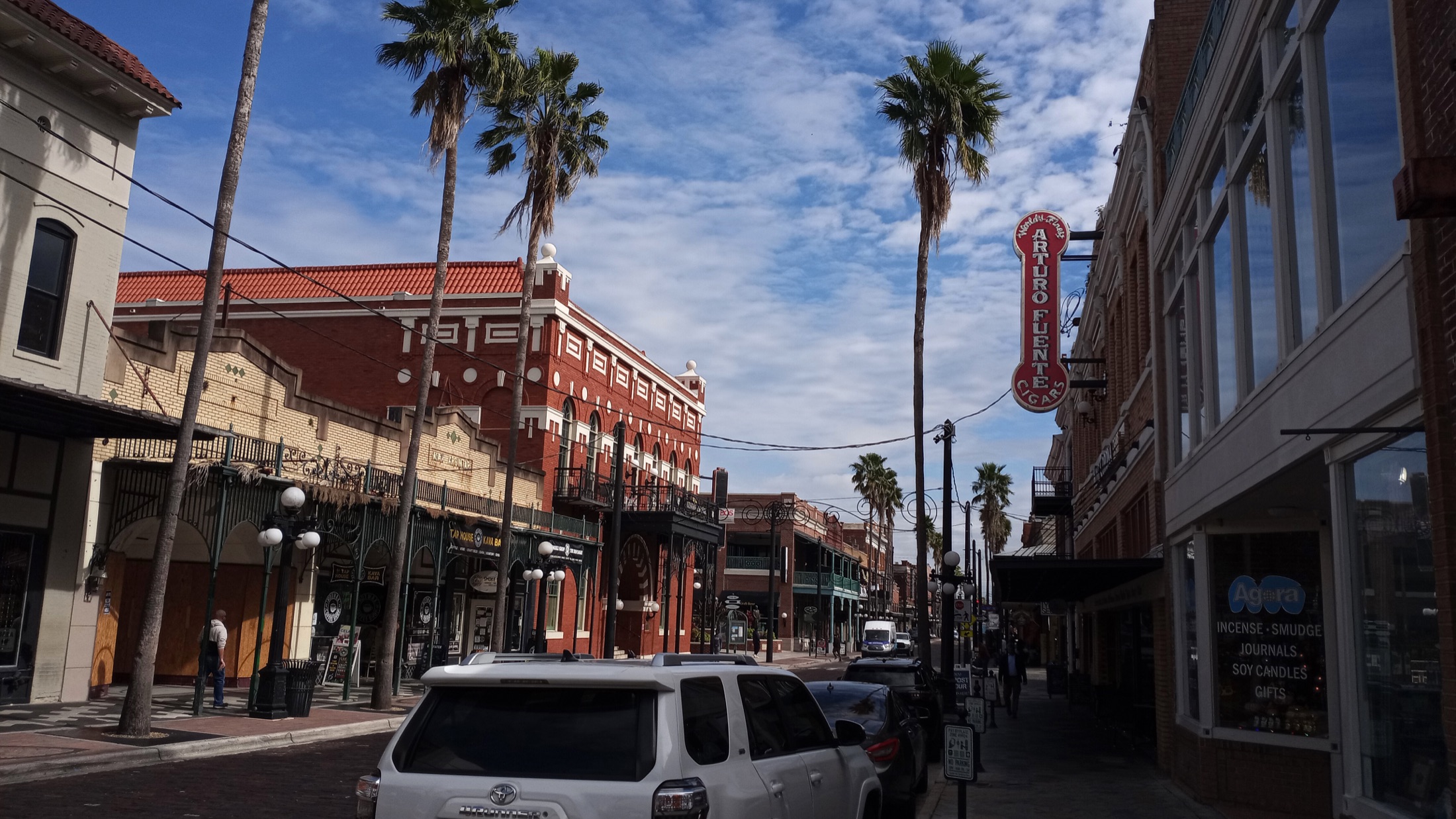
TampaThe scene is spread among distinct districts—Ybor City, Seminole Heights, SoHo, Water Street, the Heights and others.
St. PeteDowntown concentrates independent restaurants, breweries, galleries and nightlife into a relatively compact area, with other local corridors beyond it.
Beach access
TampaThe Gulf beaches are a cross-bay drive for most Tampa residents, so traffic and bridge conditions matter on busy days.
St. PetePinellas County’s Gulf beaches are generally closer, although the trip can still slow during weekends, holidays and visitor season.
Sports & entertainment
TampaConvenient for Buccaneers football, Lightning hockey, major concerts, performing arts and Ybor nightlife.
St. PeteOffers museums, waterfront events, live music and access to Rays baseball while the team’s future arrangements continue to evolve.
Outdoor lifestyle
TampaThe Riverwalk, Bayshore, city parks and the Hillsborough River anchor outdoor time, with varied recreation across a broad footprint.
St. PeteWaterfront parks, the Pinellas Trail, boating and proximity to the Gulf make the coastal setting a more constant part of daily life.
Professional centers
TampaDowntown, Westshore, the airport area, USF/medical districts and surrounding employment corridors create a larger network of job centers.
St. PeteDowntown is the primary urban employment center, with additional workplaces distributed across central and south Pinellas.
Urban vs. suburban
TampaOffers the wider range—from high-rise city living to established neighborhoods, master-planned communities and outer suburbs.
St. PetePairs a compact urban core with historic residential districts and lower-density neighborhoods across the peninsula.
Housing field notes
Tampa vs. St. Pete real estate
Rather than rely on a market statistic that may age quickly, compare the housing mix, property condition, recurring costs and location. The best value is property-specific.
Historic homes
TampaBungalows, Mediterranean Revival homes and older estates appear in areas such as Seminole Heights, Tampa Heights, Hyde Park and South Tampa.
St. PeteCraftsman bungalows, Mediterranean influences and colorful historic homes are found in Old Northeast, Kenwood, Crescent Lake and other established districts.
Condos
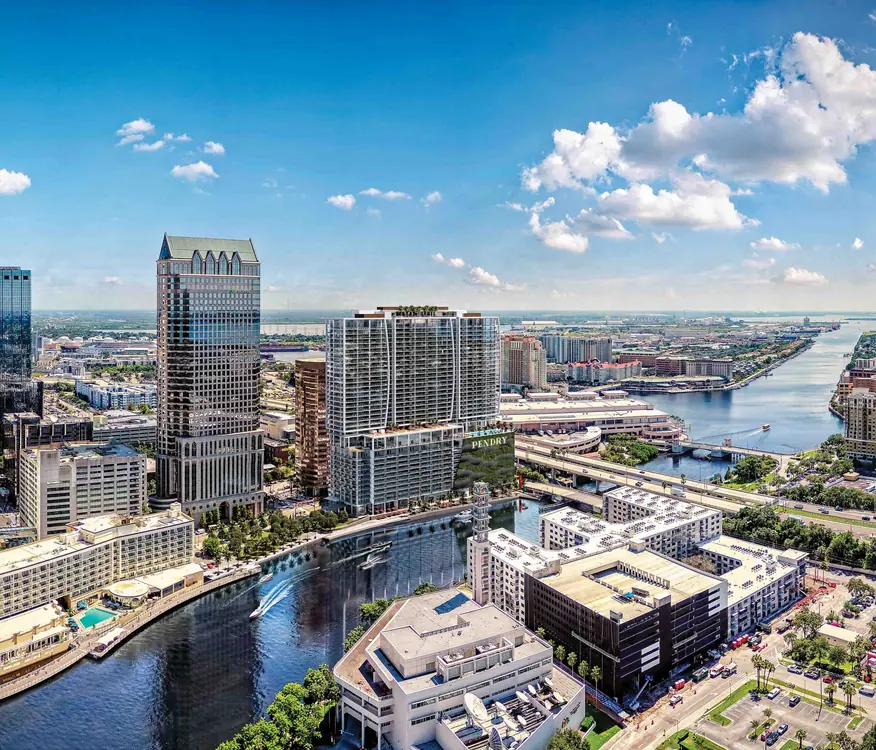
TampaConcentrated around Downtown, Water Street, the Channel District, Harbour Island and South Tampa, with building-level fees and reserves to compare.
St. PeteA broad downtown and waterfront condo market, plus buildings closer to the beaches; age, reserves, insurance and assessments vary considerably.
Townhomes
TampaCommon in urban infill areas and newer suburban communities, with a wide range of fee structures and parking arrangements.
St. PeteAvailable downtown and throughout the peninsula, often as infill where detached-home inventory is limited.
Single-family homes
TampaThe larger geographic footprint creates more variety in age, size, architecture, community style and commute.
St. PeteInventory ranges from compact historic bungalows to mid-century block homes and larger properties near the water.
New construction
TampaMore abundant within Tampa’s growth corridors and surrounding suburbs, including both community development and urban infill.
St. PeteMore constrained by the built-out peninsula; choices are often condos, townhomes, infill homes or redevelopment projects.
Waterfront options
TampaBay, canal, river and lakefront choices exist, each with different access, elevation and insurance considerations.
St. PeteBayfront, canal-front and nearby Gulf-oriented options are a larger part of the local housing story, with flood and storm exposure requiring careful review.
Lots & inventory
TampaGenerally more opportunities for larger lots and suburban inventory as the search expands north, east and west.
St. PeteLots are often more compact, especially near downtown and in historic areas; the tradeoff can be proximity and established character.
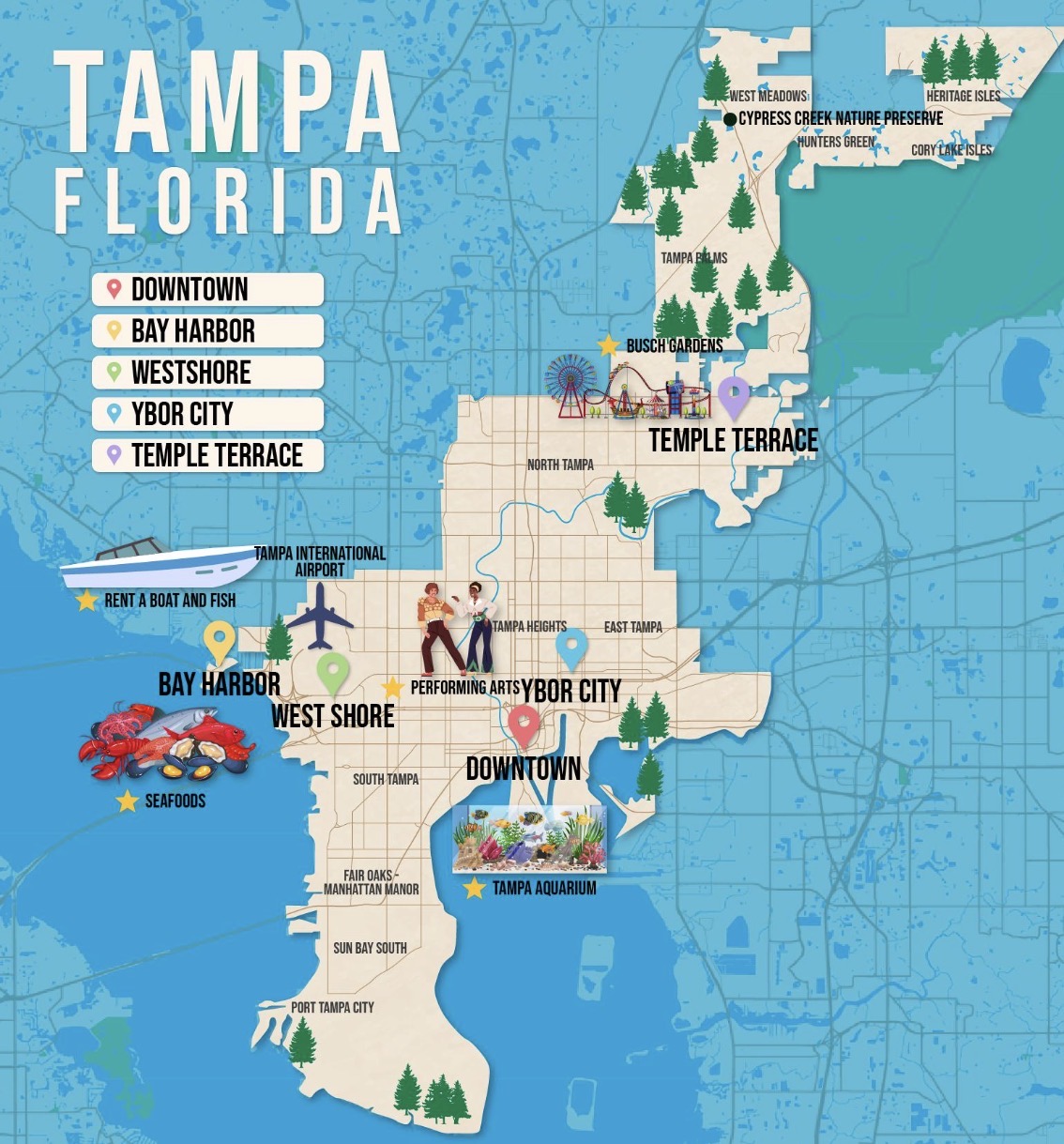
Put the comparison on the map
Neighborhoods worth knowing
Tampa
Seminole Heights ↗
Bungalows, mature trees and a strong independent restaurant scene close to central Tampa.
Tampa Heights ↗
Historic streets, modern infill and riverfront energy just north of downtown.
South Tampa ↗
A large collection of established neighborhoods with Bayshore, airport and downtown access.
Carrollwood ↗
Lakes, established landscaping and more suburban space in a central North Tampa location.
Westchase ↗
A planned-community feel with parks, village amenities and convenient airport access.
St. Pete
Historic Old Northeast
Shaded brick streets, varied historic architecture and easy access to the waterfront and downtown.
Historic Kenwood
Colorful bungalows, a strong neighborhood identity and proximity to the Grand Central District.
Crescent Lake
An established residential setting organized around one of the city’s signature parks.
Snell Isle
A quieter waterfront-oriented neighborhood near downtown, with larger homes and scenic streets.
Old Southeast
Historic homes and waterfront park access with a more relaxed residential rhythm south of downtown.
Downtown St. Pete ↗
Condos, waterfront parks, museums and a dense mix of restaurants, culture and events.
Before you choose a side
Things people don’t always think about
Bridge traffic
The Howard Frankland, Gandy and Courtney Campbell crossings connect the region, but incidents, construction and peak traffic can change a routine quickly.
Working across the bay
A cross-bay commute may be reasonable a few flexible days per week. If it is daily, test it during the exact hours you expect to travel.
Flood zones & insurance
Flood zone, evacuation zone and insurability are separate property-specific questions. Review current official maps and obtain quotes early.
Hurricane preparation
Both sides require a plan for evacuation, wind and water. Building type, elevation, roof condition and opening protection all matter.
Parking
Downtown condos, historic districts and entertainment areas can have very different parking realities. Confirm deeded spaces, guest options and street rules.
Seasonal traffic
Visitor season, beach weekends, festivals and major events can affect routes and parking in both cities—especially near the coast.
Airport access
Tampa is generally more convenient for frequent Tampa International Airport trips; the actual advantage depends on neighborhood and travel time.
Gulf beach distance
St. Pete usually offers the shorter path to Gulf beaches. From Tampa, the bridge and Pinellas traffic become part of the outing.
Downtown vs. nearby
A city’s downtown is not a stand-in for every neighborhood. Compare your preferred blocks, building type and ordinary weekly destinations.
A preference—not a stereotype
Which side fits your lifestyle?
Tampa may be a better fit if you…
- Want access to more suburban communities
- Prioritize a broader network of professional centers
- Prefer newer construction
- Want more choices for larger homes or lots
- Regularly travel throughout the Tampa Bay region
St. Pete may be a better fit if you…
- Want greater walkability around the urban core
- Prioritize beaches and a coastal lifestyle
- Enjoy restaurants, arts, breweries and local businesses
- Prefer historic neighborhoods
- Want a smaller downtown and coastal-city feel
The evolving map
What’s changing around the bay?
Water Street Tampa, GasWorx and planned Riverwalk connections continue to reshape Tampa’s urban core. In St. Pete, major downtown and waterfront-area projects are adding residences, hospitality and street-level activity. Timelines and final plans can change, so treat announced development as context rather than a guarantee.
Explore the What’s Coming guide →Continue exploring Tampa Bay
Turn the comparison into a relocation plan.
Still narrowing down your search? Read the complete Moving to Tampa Bay guide for relocation tips, commute planning, flood considerations, schools, and neighborhood strategy.